"How long do I have to close?"
The study closes nothing: it's done from plans and photographs. Its whole purpose is that the work is short and done once, instead of being redone by trial and error after you reopen.
Hospitality and retail · your silent salesperson
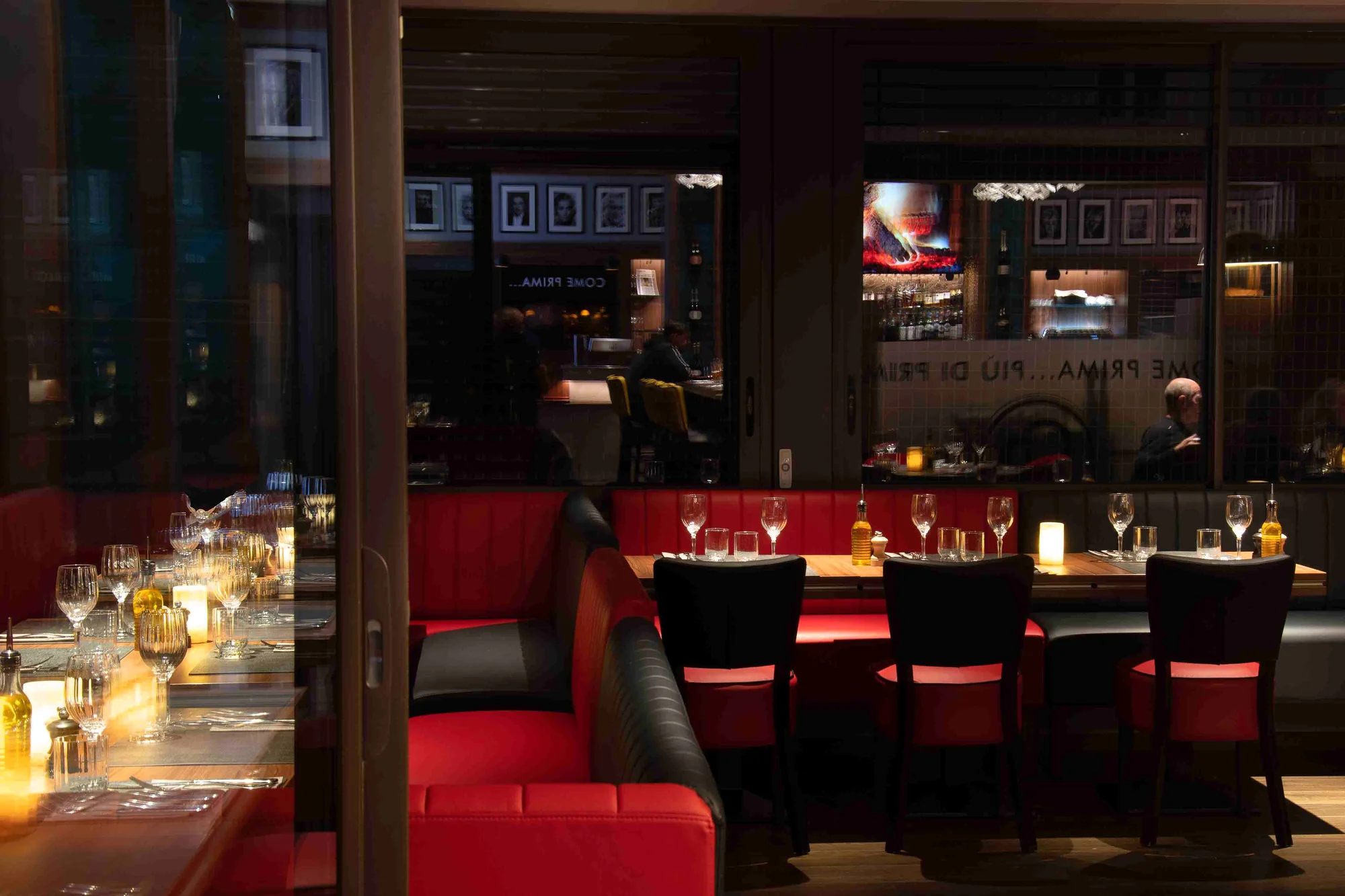
They'll only notice they didn't stay. That the dish looked better in the photo. That it was pleasant, but no more — without being able to say why. Light isn't looked at: it decides, silently, whether the evening was worth it.
The study closes nothing: it's done from plans and photographs. Its whole purpose is that the work is short and done once, instead of being redone by trial and error after you reopen.
I won't sell you a percentage I can't prove. What I can show you is what your customers see: the same room, the same menu, two lightings — and the difference between a room where people order dessert and a room where they ask for the bill.
Often positions have been planned, rarely a photometric study. The two complement each other: I regularly work from an architect's drawings without questioning their intent.
Switching to LED fixes a bill, not an atmosphere. Plenty of LED refits have cooled and flattened rooms that used to be warm — same saving, fewer customers.
The red of meat, wine and wood is the first to vanish under a poor lamp. A dish photographed in the kitchen and the same dish under your dining-room light can be two different things.
In retail the difference isn't quantity of light but contrast: a comfortable general level, with accent on what you want to sell. Uniform light highlights nothing — it merely illuminates.
It's the first thing seen by someone choosing between two places on the same street. A grey facade at 8pm isn't rescued by a good menu.
Free assessment, on site or by video call. You leave with a clear opinion and no obligation.
Let's talk about your roomA question that isn't here? Write to me, ou All client types